interior cleaning
Sun cream, salt air, dogs and bare skin. A sofa here absorbs a great deal more than it does at home.
The sofa is where an Algarve summer ends up. Sun cream and factor 50 transfer straight off skin into the fabric and oxidise into a yellow cast that creeps across the arms and the seat cushions. Salt comes in on the air and on people. Nobody sits on a sofa here in three layers of clothing, so the fabric takes body oils directly. Add a dog that has been in the pool and you have a piece of furniture doing a job it was never designed for.
It is also gradual, which is the problem. Upholstery goes from clean to grey over about two years without ever having a day where it obviously needed doing, and because the whole thing dulls at the same rate there is nothing to compare it against. Most people only see it when we clean one cushion and put it back next to the others.
how we do it
Upholstery is the least forgiving thing in the house to get wrong. We find the care label, work out what the fabric actually is and what the backing is doing, and check whether it is a fabric that can take moisture at all. Some cannot.
Under a cushion, round the back, somewhere nobody looks. We check for colour movement and how the fabric reacts before anything touches the part of the sofa you can see.
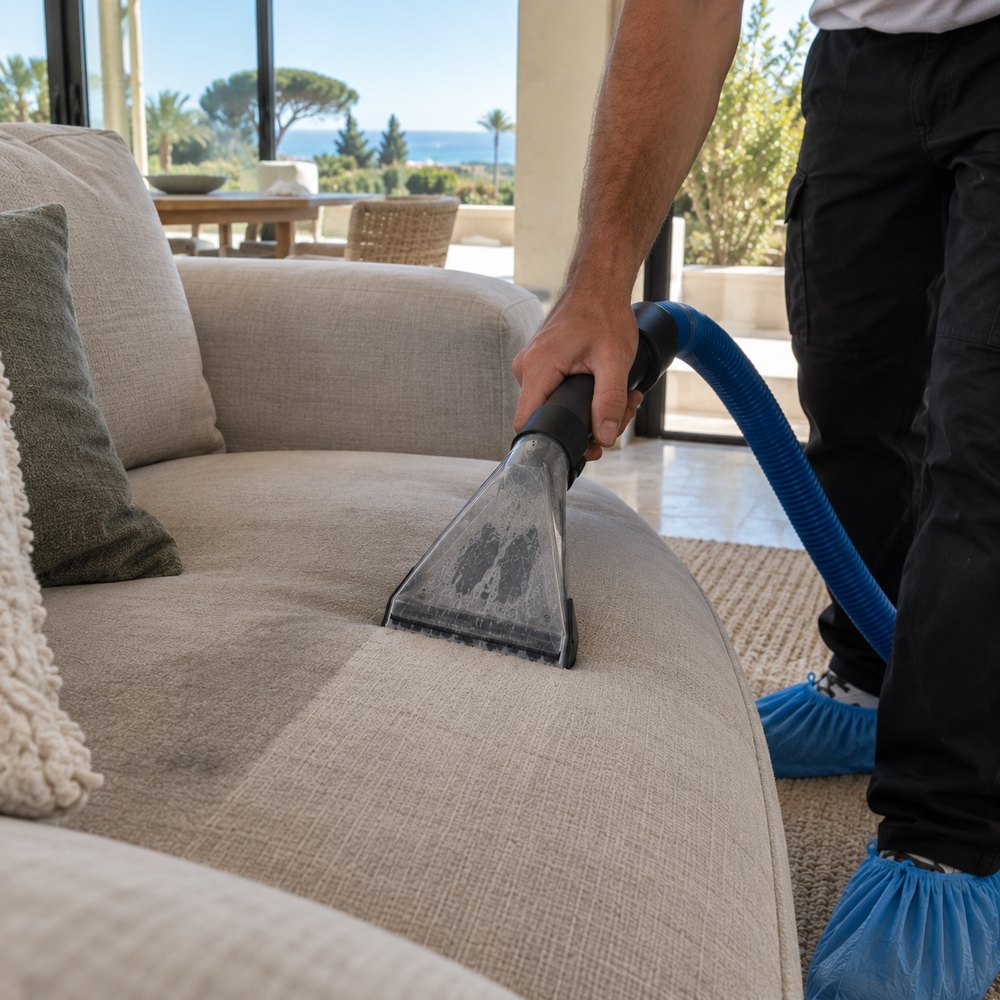
Down the sides, under the cushions, in the seams and the piping. This is where the grit, the crumbs and half the smell live, and it all comes out before any moisture goes anywhere near it.
Marks, arms, headrests and the front edge of the seat cushions are treated individually and left to dwell. Rushing this is what leaves a sofa looking cleaner in patches.
Some fabrics take a full rinse and extraction. Others can only take a low moisture clean and would water mark if you looked at them wrong. The fabric decides, not the schedule.
Upholstery holds moisture in the foam long after the surface feels dry. We groom it, set up airflow and tell you how long to leave it before it goes back into use.
what is included
A number of fabrics that are common in villa furniture, particularly certain viscose and linen blends, water mark permanently. Not temporarily, not until it dries. The moment they get wet unevenly they are marked for good, and there is no cleaning process that reverses it. If we test your sofa and that is what we find, the honest answer is a dry clean only, or in a few cases nothing at all, and we would rather tell you that than take the job.
Sun cream staining is the other one worth being straight about. Once it has oxidised into a pale fabric it has effectively dyed it, and while a clean will lift a great deal of it, a heavily marked arm will usually stay slightly lighter than it started. We will show you the difference on one cushion before we commit to the whole suite.
how we keep the standard
Every job is checked against the standard for that surface before the van moves, by someone who did not do the cleaning. If it is not right we put it right before you have to ask.
We look at the property, then give you a price. What we agree at the survey is what you pay, with no extras invented once we are on site.
You can explain what you want and be understood, and we follow up afterwards to check you are happy. Not a sales call.
where we work
We cover Quinta do Lago · Vale do Lobo · Vilamoura · Almancil · Loulé · Quarteira · Faro · Albufeira · Carvoeiro, and the surrounding area. If you are just outside it, ask anyway and we will tell you honestly whether we can look after you properly.
questions
Not if the fabric is identified correctly and the right amount of moisture is used, which is the entire reason we test before we start. The risk is real, which is why the testing is not a formality. If a fabric cannot take it safely, we will tell you rather than find out on your sofa.
Normally a few hours, and we would leave it overnight where we can. The surface dries before the foam underneath does, so sitting on it too early pulls moisture and any remaining soil back up to the surface.
Yes. Leather is cleaned and then conditioned, which is a different job to fabric and uses different products. Conditioning matters more here than it does in a cooler climate, because sun and air conditioning between them dry leather out and that is what causes it to crack.
A great deal of it, yes, and it responds much better if it has not been sitting in the fabric for three summers. Where it has oxidised into a light coloured fabric it behaves like a dye rather than a stain and some of it stays. We will do a test area first so you can see what you are buying.
No. Curtains and fabric blinds are cleaned where they hang, using a low moisture method so they are not soaked and left to dry in place. Taking them down, cleaning them and rehanging them is where curtains usually shrink or lose their drape.
the rest of the inside