The brief
Some glass is dirty. This glass had stopped being dirty and started being coated.
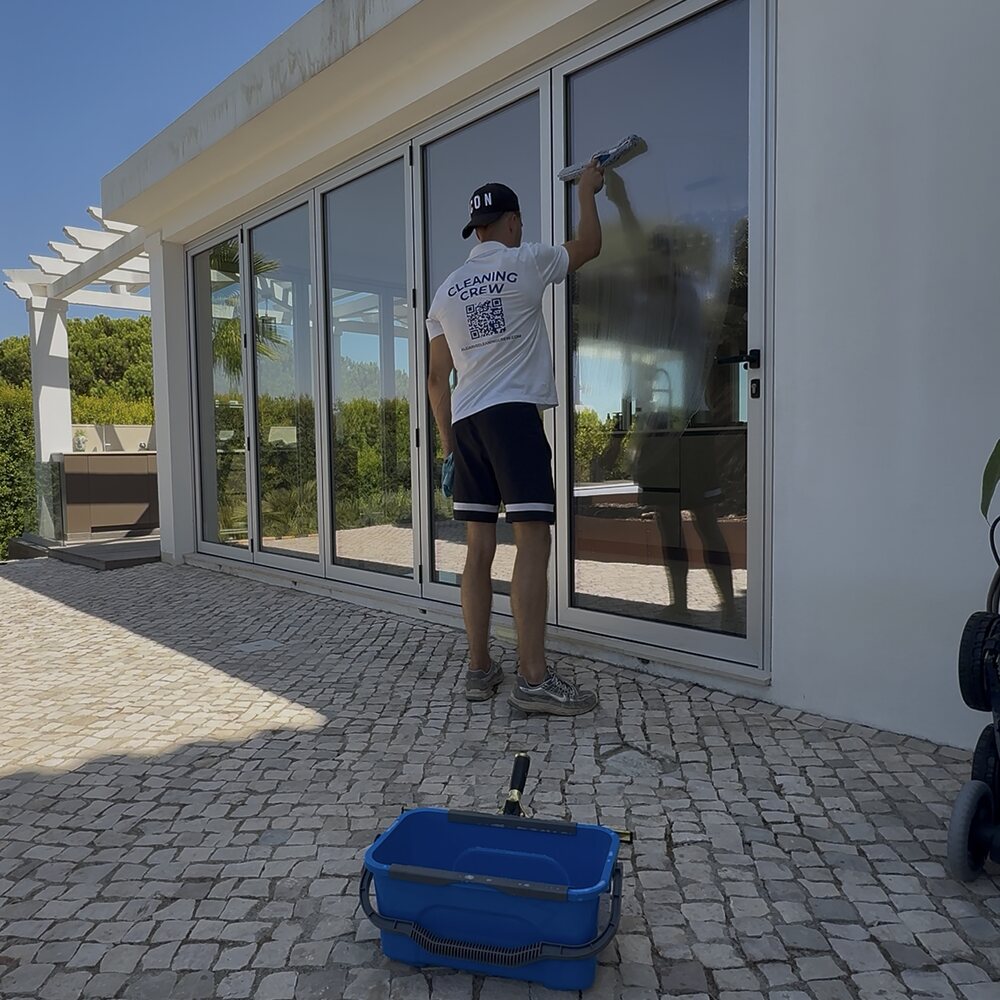
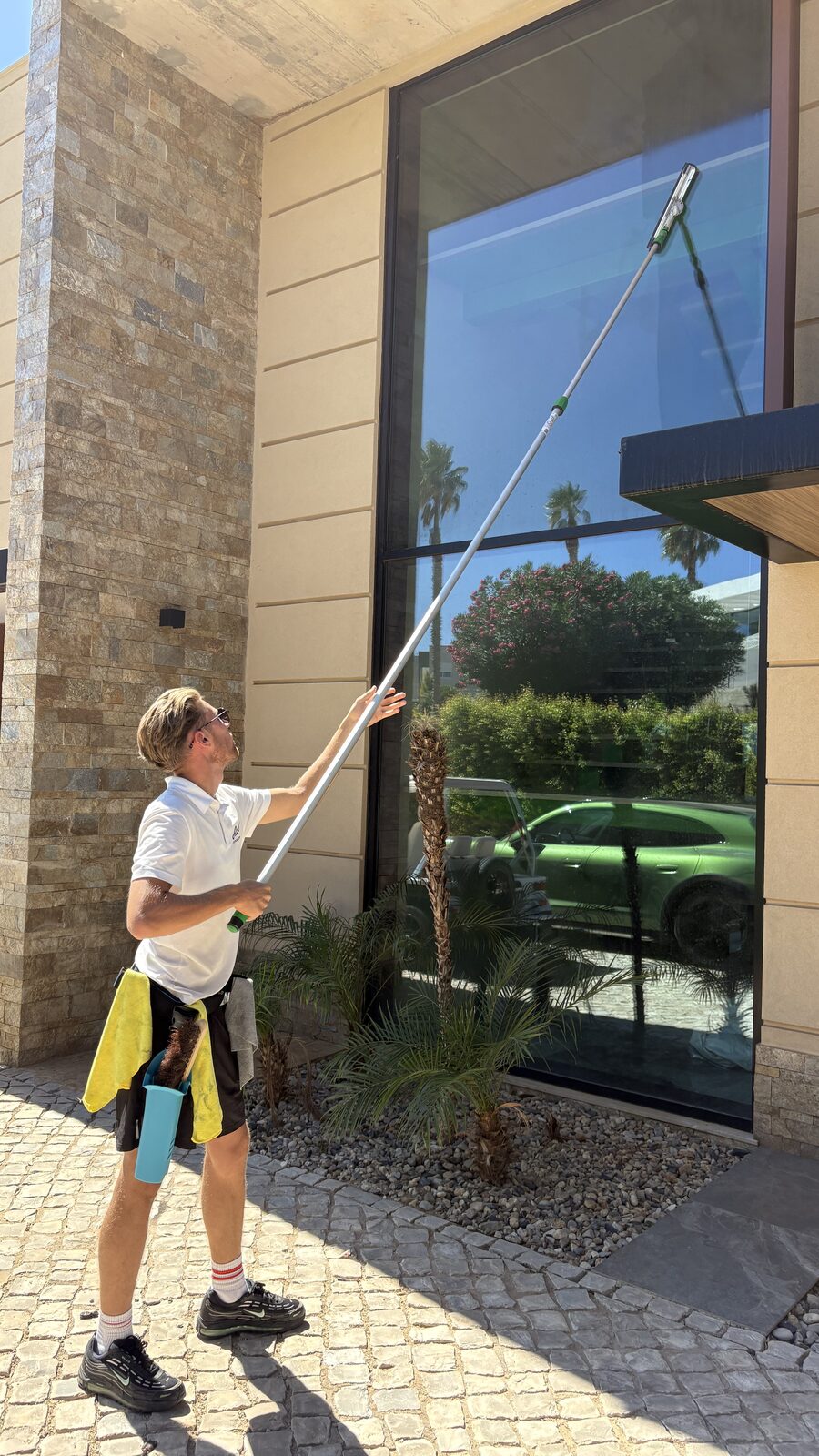
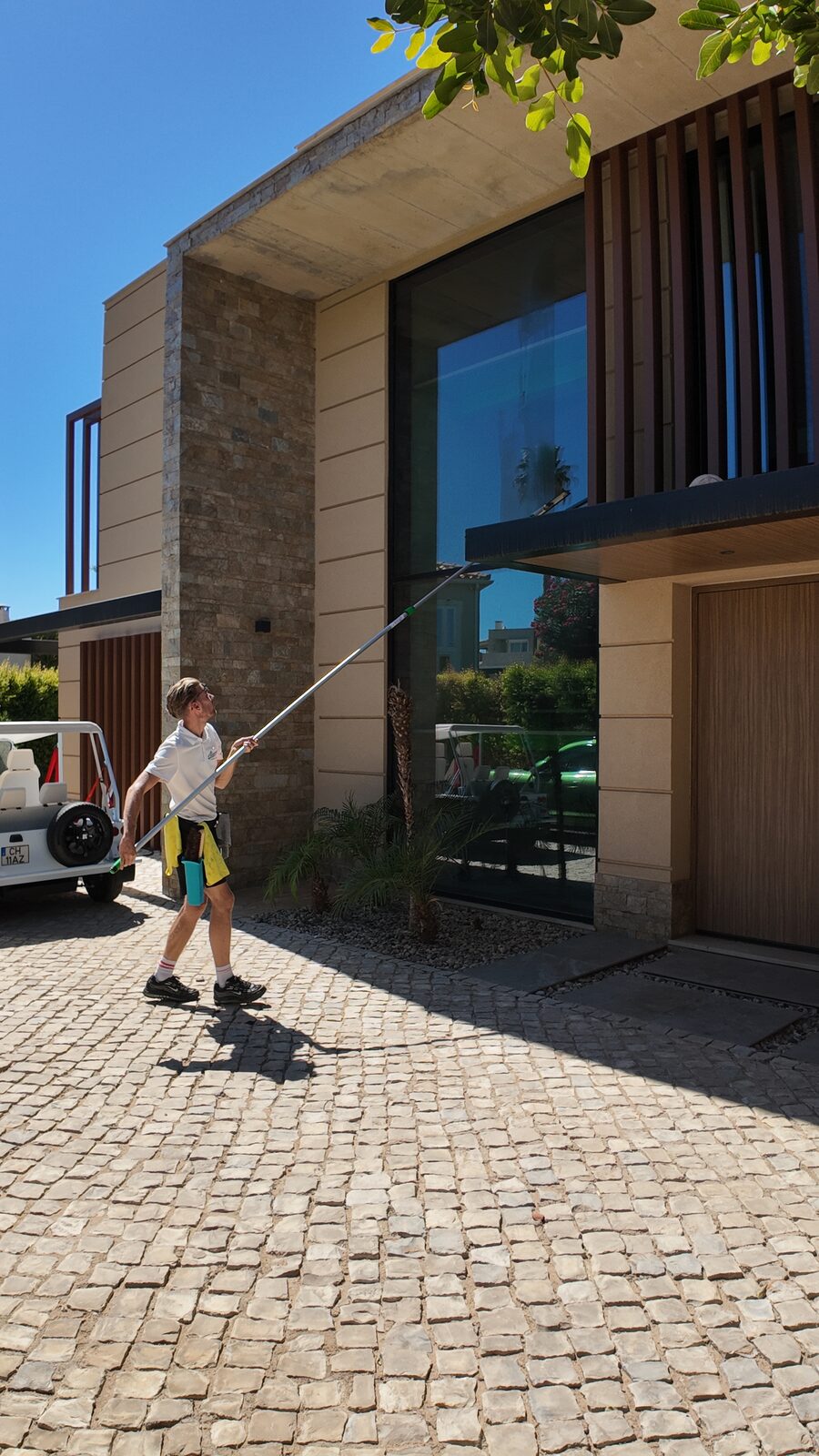
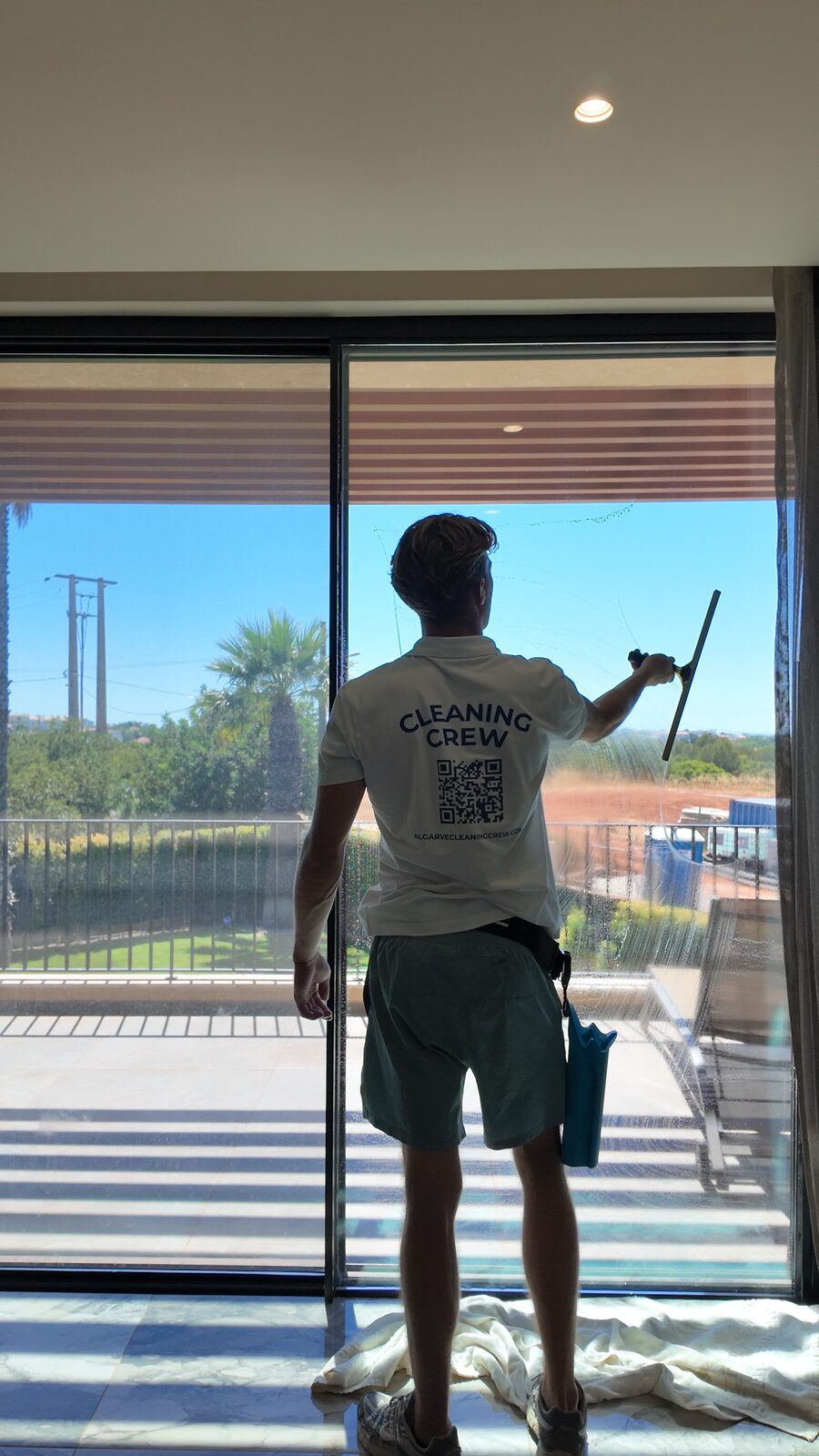
The property is a modern villa with the kind of glazing that is the whole point of the house: full-height panes on the front elevation, double height in places, doing the job a wall would otherwise do. Glass like that is unforgiving, because there is nothing else on the elevation to look at.
What had happened here is the standard Algarve story. Irrigation and splash land on the glass, the sun takes the water off, and the minerals it was carrying stay exactly where they dried. Repeat that daily for a few summers and you get calcário: a hard white bloom that a normal wash slides straight over.
So the job came in two halves. Restore the affected panes, then clean the whole property inside and out. Both were quoted at the survey, because the restoration is the bit that changes the time on site and we would rather agree it before we start than raise it halfway through.
How we worked it
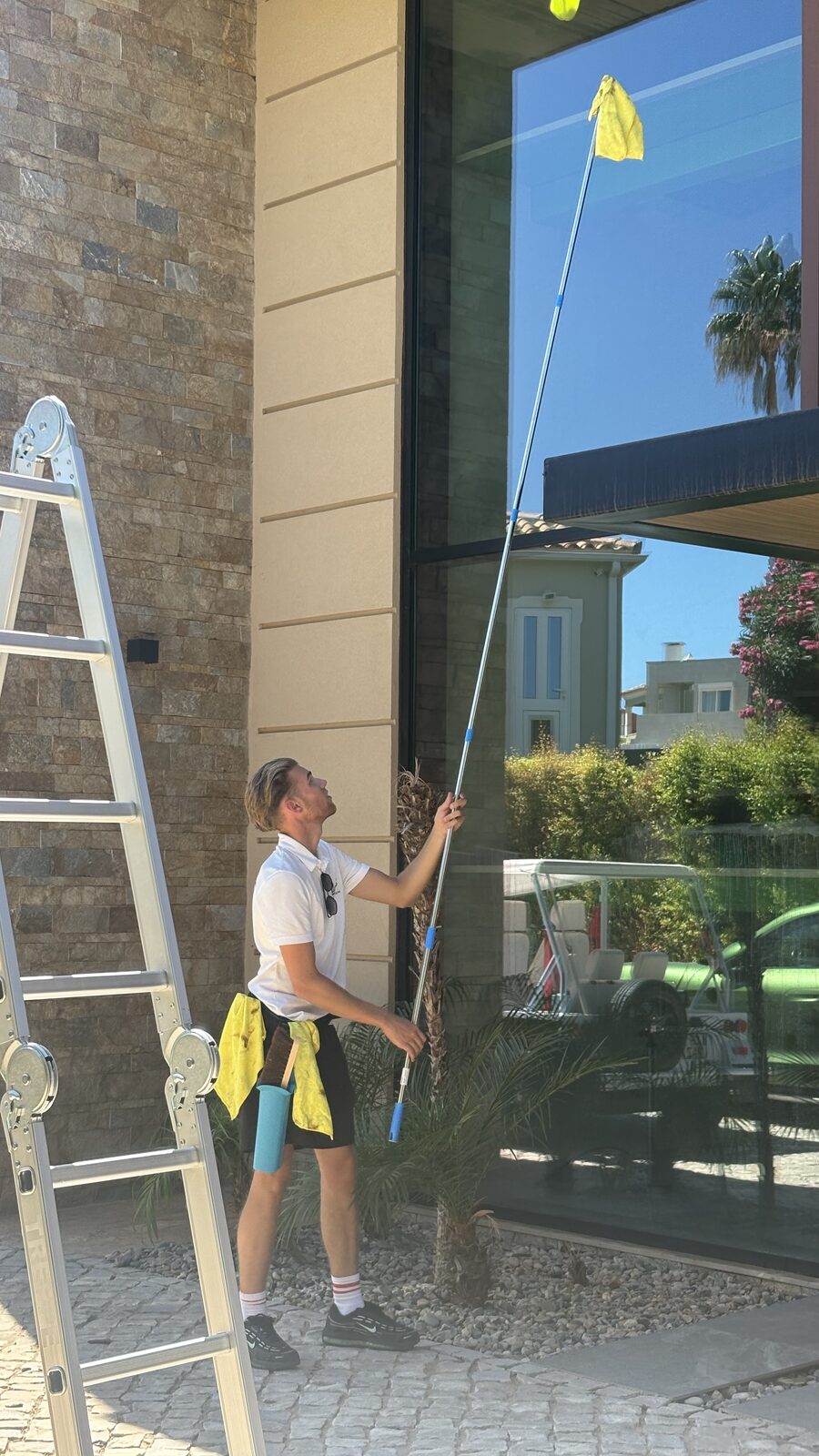
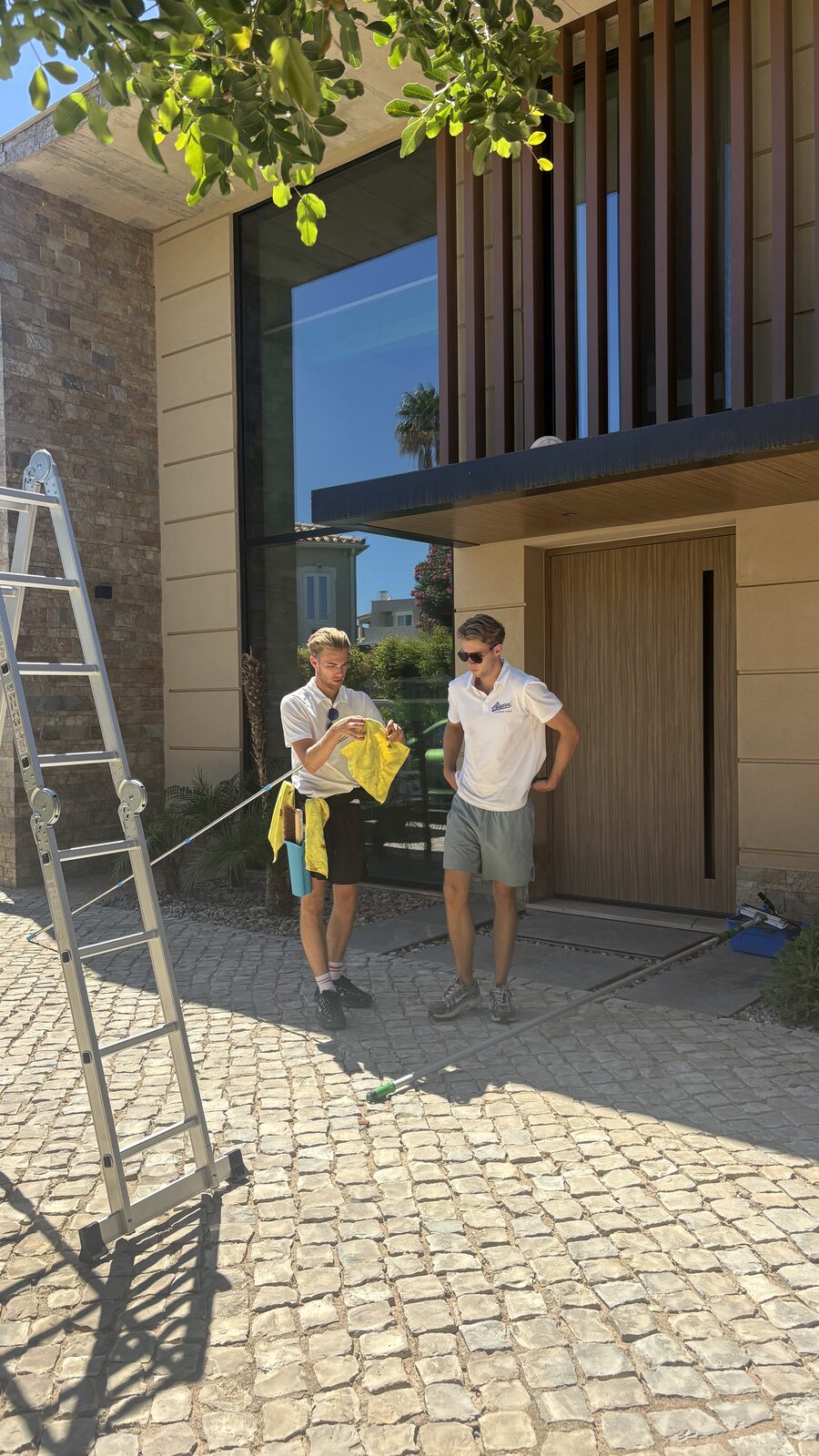
Restoration first on the panes that needed it, then traditional cleaning throughout: applicator and solution, squeegee, microfibre for edges, frames and sills. Ladder and pole for the height, with the ladder set on level solid ground rather than propped against the house.
Worked out which panes actually needed it
Not all of them did. Restoration is slower and more expensive than cleaning, so it goes on the glass that genuinely will not come clean without it, not on the whole property as a matter of course.
Deposits broken down wet
The affected glass was kept wet and worked patiently until the mineral let go, then flushed off. This is the step there is no shortcut for. Going at a hard deposit dry, or fast, is how you trade a stain for a scratch.
Rinsed and re-checked before moving on
Each restored pane was cleared and looked at properly before we called it done, because you cannot judge the result while the glass is still wet and covered in what came off it.
Then the ordinary clean, top down
Once the difficult glass was sorted the property was cleaned the normal way: exterior faces first, high before low, elevation by elevation, so nothing finished got run over by dirty water from above.
Inside, with the floors protected
Second face done from inside with protection down under the working area. Anything moved was put back where it was.
Checked at an angle, from both sides
Glass checked in raking light rather than straight on, inside and out, before the van moved.
What was included
- Glass restoration on the affected panes
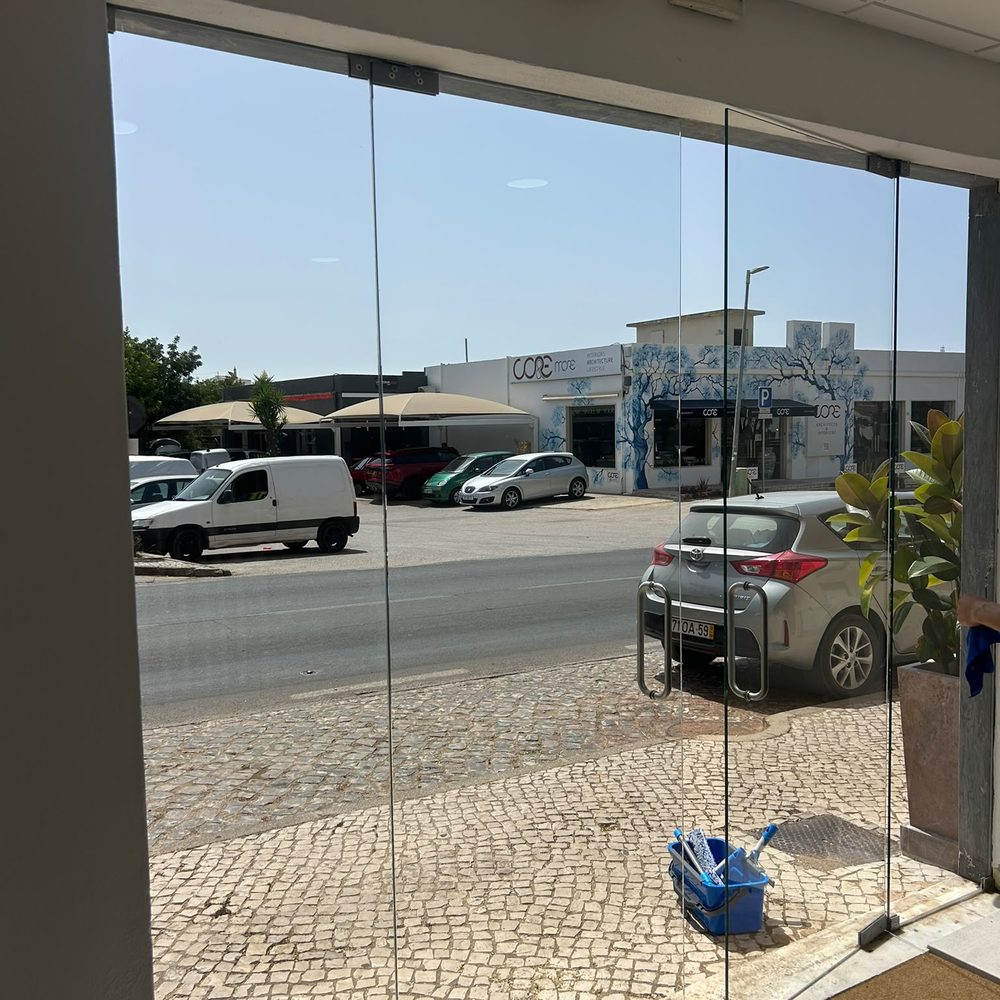
- Every reachable pane, both faces
- Full-height and double-height picture glass
- Sliding doors, inside and out
- Frames and sills
- Sliding door tracks cleared
- Glass checked in raking light before leaving
The result
Being straight with you about hard water
Most calcário comes off, and on this villa most of it did. But there is a line, and it is worth knowing where it sits. Minerals that have been left on glass for long enough stop sitting on the surface and start eating into it. Once that has happened the mark is part of the pane, and restoration improves how it looks without removing it. Anyone telling you otherwise is either replacing the glass or selling you something.
The honest version is that we look at it at the survey, tell you which panes will come back and which will only improve, and quote accordingly. The other thing worth saying: restoration is a fix, not a habit. Once glass is clear, keeping the sprinklers off it and getting it washed regularly is what stops you needing this again.
Common questions
What is glass restoration, and how is it different from cleaning?
Cleaning takes off what is sitting on the glass. Restoration deals with mineral deposits that have bonded to the surface and no longer move for a normal wash. It is a slower, wetter, more careful step done before the clean, on the panes that need it rather than on the whole house.
What causes those white marks on villa glass in the Algarve?
Hard water, mostly. Sprinkler overspray and pool splash land on the glass, the sun takes the water away and leaves the calcário behind. Do that every day through an Algarve summer and it stops being a film and starts being a crust.
Will restoration take every mark off?
It takes off the deposit sitting on the glass, which is the large majority of what you are looking at. What it cannot do is undo etching, where minerals left long enough have eaten into the surface itself. That damage is in the glass, not on it. We tell you which is which at the survey.
Do you clean the inside as well?
Yes, and on this job we did. Both faces in one visit is the sensible way round, because once the outside is clear the inside is the only thing left to notice.
Do you cover Vale Formoso and Almancil?
Yes. Vale Formoso sits on the edge of Almancil, a few minutes from Vale do Lobo and Quinta do Lago, so it is inside our core round rather than a trip out.