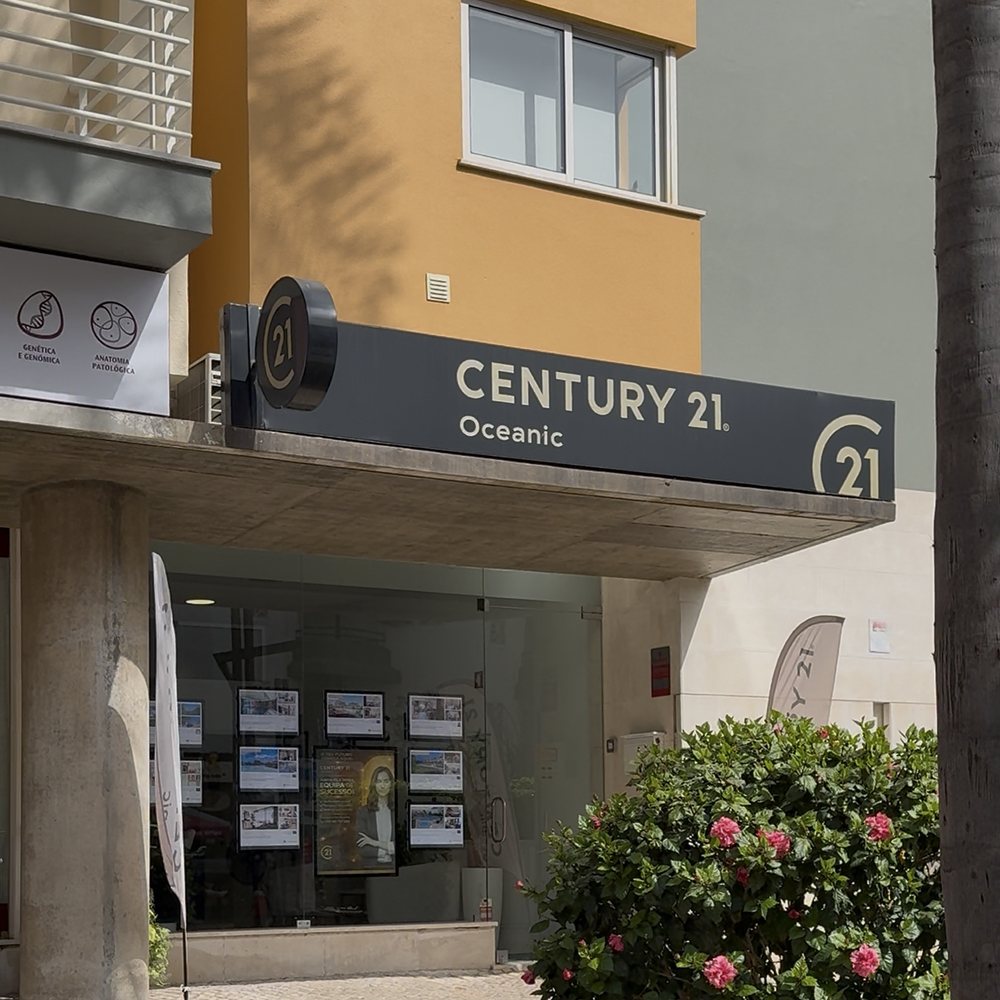
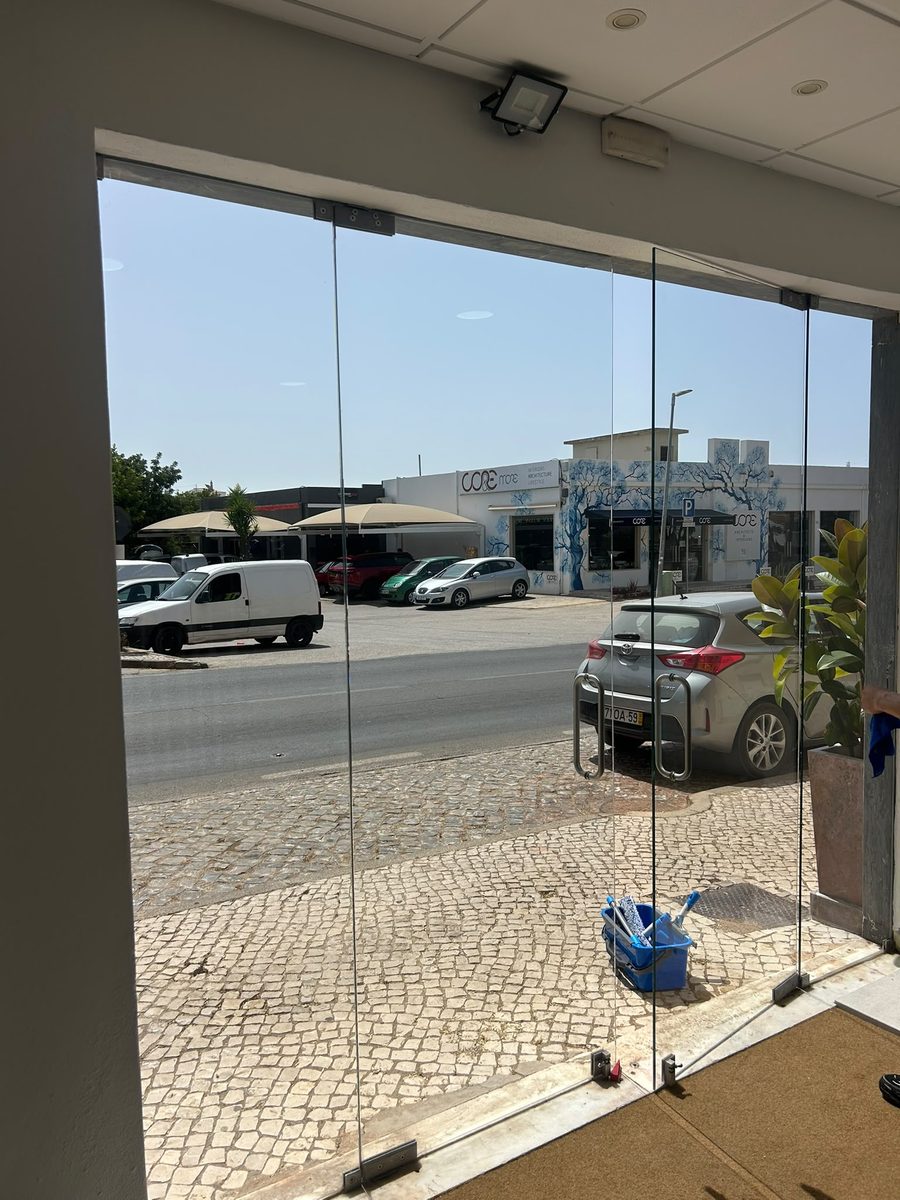
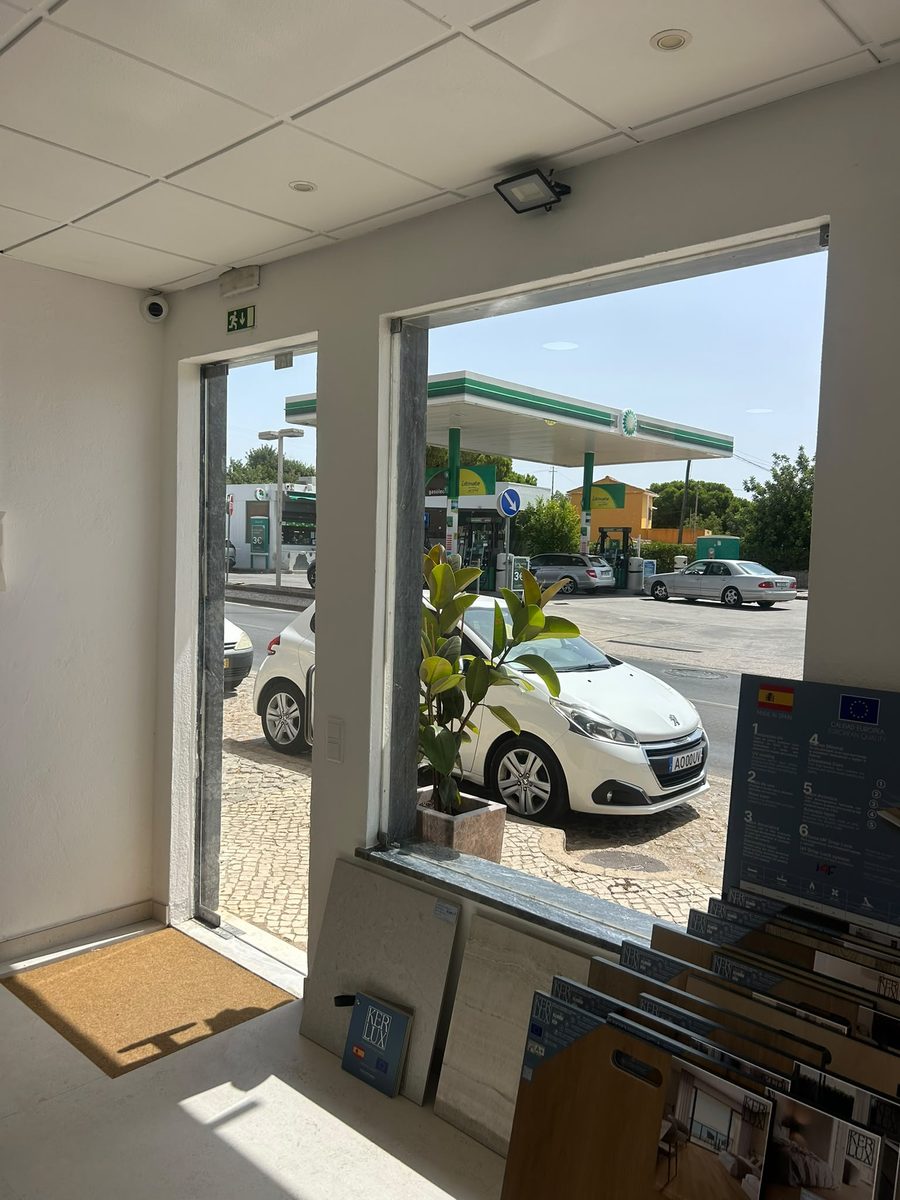
The brief
In a shop that sells how a room looks, a hazy shopfront is not a maintenance issue. It is a shop window with a filter over it.
Almancil is where the Golden Triangle does interiors. The strip is full of design studios, kitchen and surface specialists and galleries, and almost all of them sell through the window first. Someone driving past sees a lit room behind glass, and the glass is either invisible or it is not.
The brief here was both faces. Outside carries road film and dust off the strip, which is a busier and grittier environment than a resort frontage. Inside carries hand marks at door height and the film that settles on the inside of any glass wall.
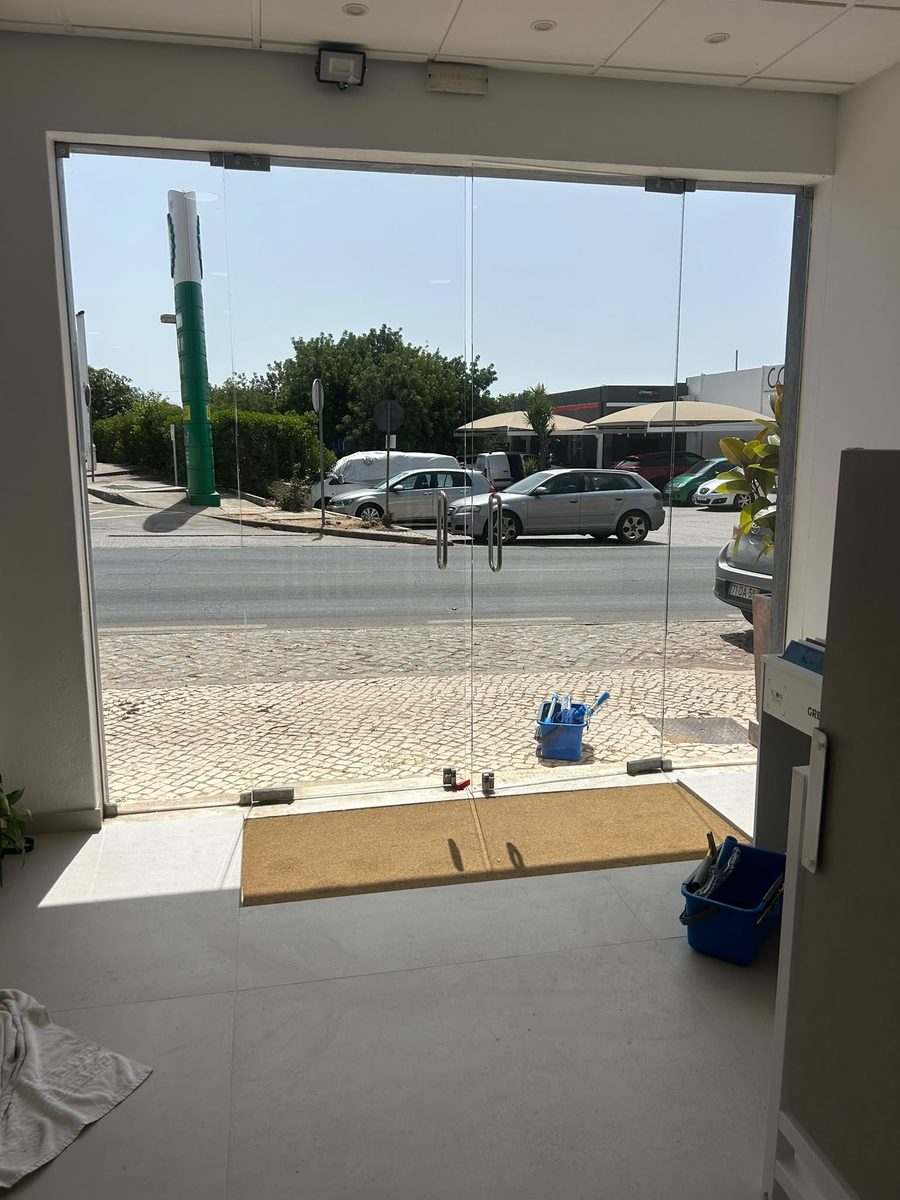
The complication here is the glass itself. This is a full-height frameless frontage, structural panes running floor to ceiling with almost nothing between them. There are no glazing bars to break the work into manageable sections and no frame to hide an edge in, so each pane has to be washed and pulled as one continuous surface before the solution starts to dry.
The space was recently fitted out, which cuts both ways. There was very little to work around on the inside face, and a new floor immediately below the glass that had to stay exactly as we found it.
How we worked it
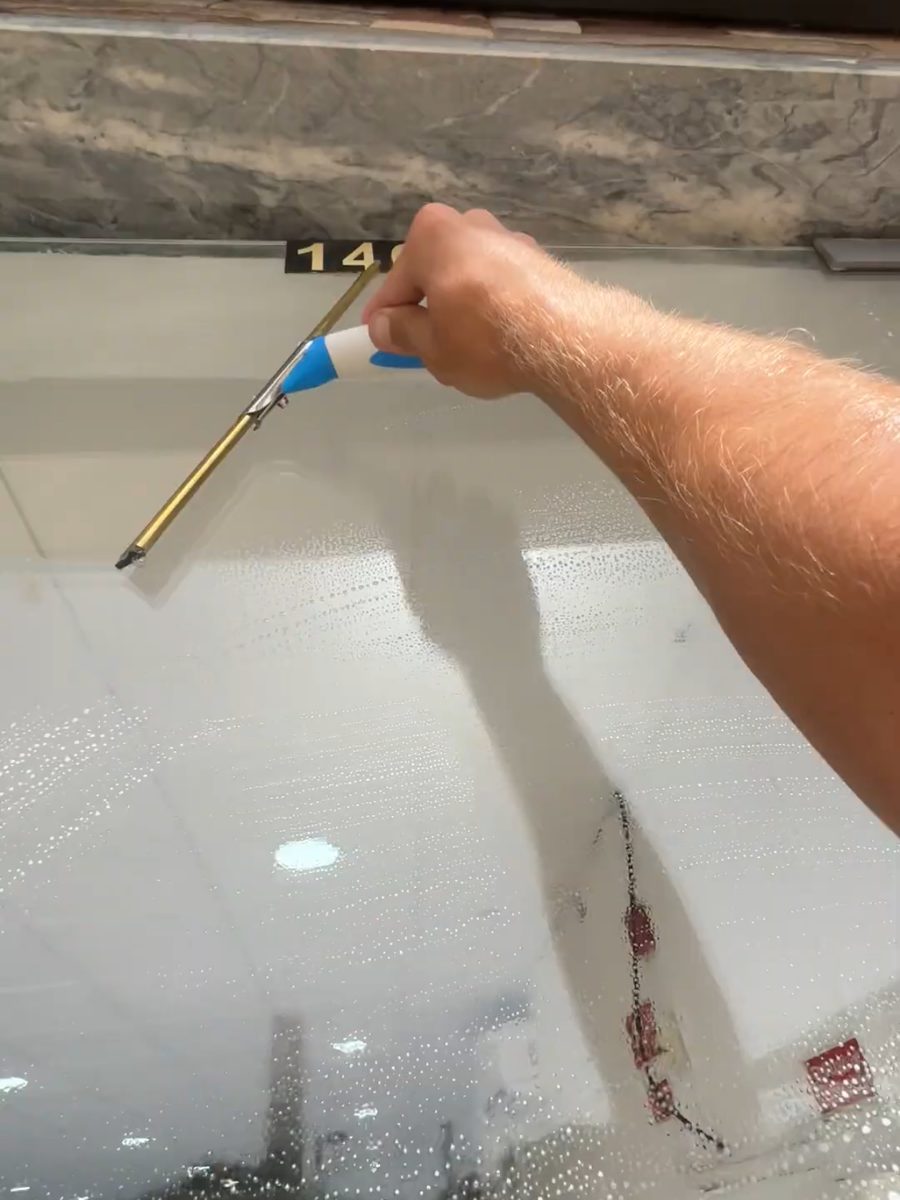
Traditional method on both faces. Applicator and solution on, squeegee off, microfibre to detail the edges and the fittings. Controlled water on the inside, with the amount on the applicator dropped right down so nothing runs anywhere it should not.
Timed around the showroom, not around us
Commercial glass gets cleaned when it suits the business, which usually means before opening or in a quiet part of the day rather than whenever it suits our route.
Outside first
The exterior face carries road film off the strip, so it is done first and finished before anyone goes inside. The top of the glass is worked from a pole rather than propping anything against a frameless pane or its fittings.
Floor protected, then inside on controlled water
Matting goes down and the bucket sits on it before anything is wet. Then water is kept to a minimum on the applicator, edges are detailed by hand and the base of every pane is dried, because on a frameless frontage the glass runs straight down to a newly laid floor with no sill to catch anything.
Each pane in one continuous pull
A frameless pane cannot be done in sections. Each pass runs the full width and overlaps the one before it, blade wiped every time, because with no glazing bar to interrupt the eye any hesitation shows up as a line straight down the middle of the window.
Edges, fittings and the door
The pane edges, the patch fittings top and bottom, the door glass and the handle area all get done, because that is the part every visitor touches and the part a photograph shows.
Checked from the pavement
The final check is done from outside at the distance a customer actually sees it from, in raking light, then again from inside. Anything missed is redone before the kit goes back in the van.
What was included
- Full shopfront glazing, outside face
- Same glazing, inside face
- Door glass and handle area
- Pane edges and patch fittings
- Top of the glass worked from a pole
- Floor matted and protected below the glass
- Checked from the pavement and from inside
The result
Why frameless glass is less forgiving than a normal shopfront
A shopfront divided by glazing bars is easier work than it looks, because the bars break the glass into panels that can be finished one at a time and they hide the edges. Take them away and there is nowhere for a missed edge or a stalled squeegee pass to hide. It is the same reason a modern villa with fewer, bigger windows takes longer than an old one with dozens of small ones.
We also will not flood the inside of a frontage like this to save time. Controlled water, matting on the floor and a dried base take longer than the way glass gets cleaned on an exterior, and with the pane running straight down onto a new floor it is the only sensible way to work.
Common questions
Do you clean commercial premises as well as homes?
Yes. Shopfronts, showrooms, offices, restaurants and estate agencies across the Golden Triangle, on a one-off basis or a regular round. Commercial glass usually wants doing more often than domestic, because it is judged from the pavement every day.
Can you work while we are open?
Yes, and often we do. Where a showroom would rather we were not in the way, we come before opening or in a quiet part of the day instead. It is arranged around your trading, not our route.
Do you clean full-height frameless glazing?
Yes, and it is worth knowing it is a different job to a framed shopfront. With no glazing bars each pane has to be washed and pulled as one continuous surface, and there is no frame to hide an edge in, so it takes longer than the same area of divided glass.
Is there a risk of water on the floor or the stock?
That is exactly why we work differently indoors. Matting goes down first, water on the applicator is kept low, edges are detailed by hand and the base of every pane is dried, so nothing runs onto the floor or anything standing near it.
Do you cover Almancil?
Yes. Almancil is inside our core round along with Quinta do Lago, Vale do Lobo, Vilamoura, Loulé and Quarteira, so it is a local job for us rather than a trip.